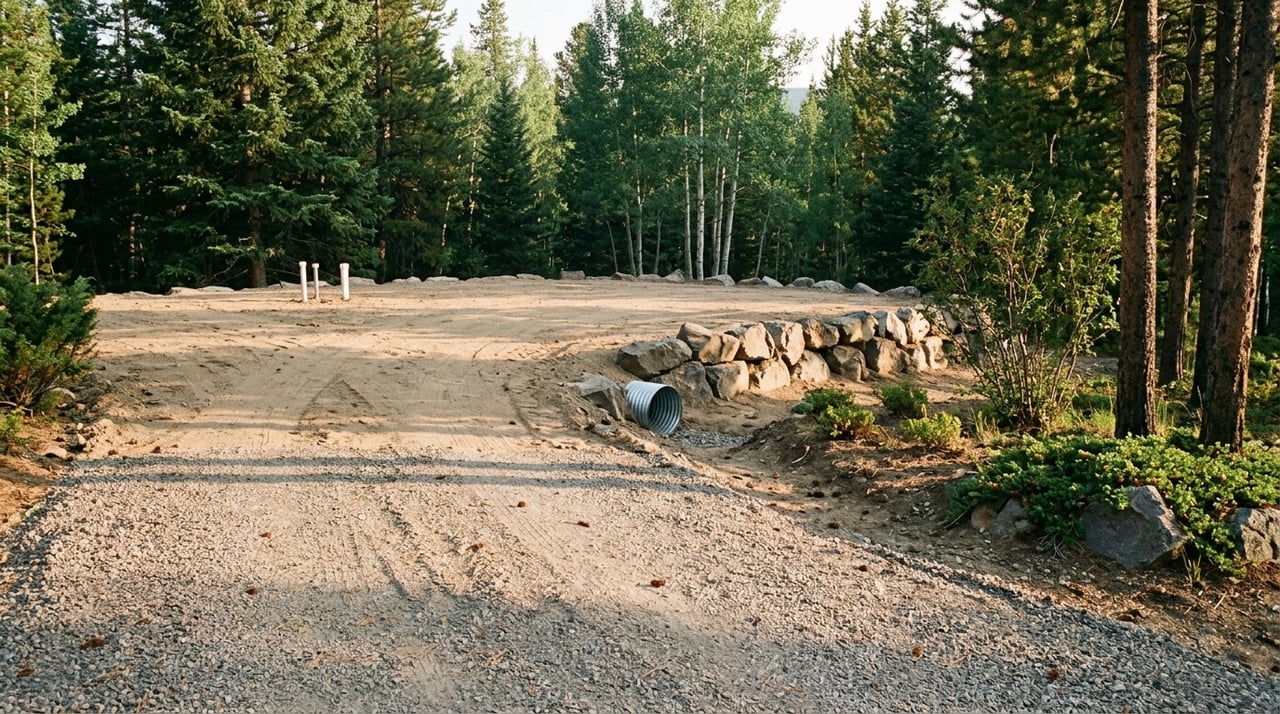
Thinking about buying land in Blaine County? A beautiful parcel can look like the perfect place to build, but the real question is whether you can actually do what you want with it. If you are considering a buildable lot, acreage, or a future development site, you need more than a survey and a scenic view. You need clarity on zoning, access, utilities, hazards, and review timelines. Let’s dive in.
What “buildable” means in Blaine County
In Blaine County, a parcel is not automatically buildable just because it is vacant land. Base zoning is the starting point, but it is only one part of the picture. Overlay districts, site conditions, legal access, water, and wastewater feasibility can all affect whether you can move forward.
That is why two parcels with similar acreage can have very different outcomes. One may have a straightforward path to a homesite, while another may require added review, engineering, or approvals before anything can be built.
Base zoning sets the baseline
Blaine County includes a wide range of zoning districts, from lower-density rural and agricultural areas like A-20, A-40, R-10, RR-40, and RC-160 to more compact residential districts such as R-5, R-2½, R-2, R-1, R-.4, and R-1/4. Those districts range from one dwelling unit per 40 acres down to one per quarter acre.
That spread matters. A parcel’s acreage alone does not tell you how many homes it may support. You need to know the actual zoning district and how the county applies density standards to that specific site.
Overlays can override the base zoning
Blaine County uses overlay districts that sit on top of the underlying zoning. Where an overlay applies, its rules take priority. The county’s overlays include avalanche, airport vicinity, community housing, floodplain, mountain, scenic highway, wildlife, and wetlands.
This is a major reason land buyers need a deeper review before closing. A lot may appear to meet the base density standard, yet still face restrictions tied to slope, flood risk, scenic corridor rules, or mountain-area review.
Minimum standards are not automatic approval
One of the most important details in the county code is that minimum lot area and density standards are just that, minimums. They do not guarantee subdivision approval or an automatic right to build exactly what you have in mind.
Depending on the parcel and your goals, you may still need subdivision approval, a conditional use permit, a variance, or a transfer of development rights strategy. In practical terms, that means your purchase decision should be based on verified use potential, not assumptions.
Access, water, and septic come first
In Blaine County, infrastructure questions often matter just as much as zoning. Before you focus on floor plans or views, confirm that the parcel has legal access and a realistic path to water and wastewater service.
These are the issues that can quickly change the cost, timeline, and feasibility of a build.
Legal access is essential
A parcel needs more than a visible driveway or nearby road. The county notes that county road rights-of-way are generally 50 feet wide unless there is evidence of a different width, and private use of the right-of-way usually requires an approved approach or encroachment permit.
The county’s building checklist also states that a road access or encroachment permit is required if there is no approved existing access. If the access is from a county road, Blaine County handles it. If access is from a state highway, Idaho Transportation Department review may apply.
Water service depends on the lot
If a parcel will connect to municipal or community water, the building application requires a will-serve letter. If the property will rely on a well, the county checklist says an Idaho Department of Water Resources drilling permit is required.
For domestic wells, a separate water-right permit is not required before the drilling permit is approved. Even so, this is not something to leave until late in the process. Water service needs to be confirmed early so you understand the path forward.
Septic approval should happen early
Septic feasibility is one of the most important checkpoints for vacant land. Blaine County states that septic permits, plan reviews, and approvals must come directly from South Central Public Health District before a building permit is submitted.
That means a parcel’s value can change materially if wastewater is straightforward versus uncertain. If you are looking at land outside centralized sewer service areas, early septic review is a smart first move.
Terrain and hazard layers can shape the deal
Some of the most attractive parcels in Blaine County also come with the most complex site conditions. Views, hillside settings, river proximity, and mountain terrain can add appeal, but they can also add cost, engineering, and review.
The county’s building checklist requires site plans to show contours, drainage, driveway and fire access, septic and well locations, utility locations, floodplain, riparian and wetland setbacks, scenic highway overlay, avalanche hazard, mountain overlay, and limits of disturbance. That tells you how seriously physical site conditions are taken during review.
Floodplain and riparian limits matter
Near rivers and low-lying land, floodplain and riparian regulations can be a major constraint. Blaine County requires review for development within the floodplain, including grading, cut and fill, riprap, and bank stabilization work.
The county also states that the first floor and mechanical systems must be at least two feet above the mapped flood level. Riparian setbacks can be significant as well, including 75 feet for Class 1 streams such as the Big Wood River, and new construction and septic installation are prohibited within those setbacks.
Wildfire planning is part of building
Wildfire is a countywide issue in Blaine County. County Firewise guidance calls for about 30 feet of defensible space close to the home, reduced fuels from 30 to 100 feet, and in some cases coordinated fuel reduction out to 200 feet.
For buyers, this means the buildable area is not the only consideration. You also want to understand how the surrounding terrain, vegetation, and access could affect site planning and long-term property management.
Avalanche and mountain overlay can be decisive
Mountain-view and ski-adjacent parcels often attract strong interest, but they can require careful review. In high avalanche hazard areas, Blaine County does not allow public roads or residential, commercial, or industrial building permits.
In moderate hazard areas, residential use may be possible, but it can require setbacks, engineered design, and protection of natural barriers. The mountain overlay adds another layer, and the county’s stated policy is to direct development outside the mountain overlay whenever possible.
Scenic Highway Overlay may affect design
Parcels on or near Highway 75 may face added visual and site-alteration controls under the Scenic Highway Overlay District. That can include permit or written-determination requirements for berms, fences, and sight-obscuring vegetation screens.
For some buyers, that may be manageable. For others, especially those with a very specific design vision, it is an important issue to identify before making an offer.
Due diligence that can save you time
Land purchases often succeed or fail based on upfront diligence. In Blaine County, the smartest buyers usually start by confirming the parcel’s legal status, utility path, and review complexity before they get attached to a concept.
A clear process can help you avoid surprises.
Start with a parcel determination
A parcel determination is often the first development-related step because it helps clarify the number of lots of record in ownership at the time of development. This can be especially important if you are evaluating whether a parcel can be split or whether it supports only one dwelling right.
For investors and buyers looking at future upside, this is a critical detail. The number of legitimate buildable outcomes often matters more than the raw acreage.
Know when TDR may apply
Blaine County’s transfer of development rights, or TDR, program can materially affect land value and development strategy. Sending areas include A-20, A-40, and R-10, while receiving areas include A-20 and R-5.
The county says an A-20 receiving area can increase from one unit per 20 acres to one unit per 2.5 acres, with at least 10 contiguous acres in the receiving area. Since TDR pricing is market-driven rather than fixed by ordinance, this is an area where careful analysis matters.
Expect a front-loaded review process
The county’s building-review sequence is front-loaded. All building permit applications receive fire district, zoning, and building department approval before issuance, and the county recommends zoning pre-review for properties in overlay districts.
The checklist also notes that fire district review can take up to 14 working days, septic approval must come first, and excavation counts as the start of construction. In plain terms, parcels with confirmed access, utilities, and fewer overlay complications often have a cleaner path than parcels needing subdivision, TDR coordination, or special overlay review.
How location shapes long-term appeal
In Blaine County, location affects land value in a practical way. It often comes down to entitlement friction and infrastructure readiness rather than just acreage or scenery.
The county’s planning framework supports more compact development near centralized water, sewer, transportation facilities, and jobs. That helps explain why parcels closer to existing services may appeal to a broader pool of buyers, while more remote or mountainous sites can involve greater development complexity.
Rural acreage versus in-town lots
Larger rural parcels can offer privacy, scenery, and flexibility for certain uses. At the same time, they may be located in districts with lower base density, added wildlife review, wildfire considerations, TDR issues, or slope constraints.
Smaller lots closer to town may offer less land area, but they can be easier to evaluate from an entitlement standpoint if utilities and access are already in place. For many buyers, that tradeoff is worth careful analysis.
A smart buyer checklist
Before you buy land or a buildable lot in Blaine County, make sure you can answer these questions:
- Is there legal access, and if not, what easement or county or state permit is needed?
- Will the parcel use municipal or community water, or will it need a well permit?
- Has septic feasibility been reviewed by South Central Public Health District?
- Do any overlays apply, including floodplain, riparian, mountain, avalanche, scenic highway, wetlands, or wildlife?
- Will the intended use require subdivision approval, a variance, a conditional use permit, or TDR?
When you are buying land in a market like Blaine County, details drive outcomes. The right parcel can create real opportunity, but only if the zoning, infrastructure, and site conditions support your plan. If you want a data-driven review of a lot, acreage tract, or development parcel, Jordan Jadallah can help you assess the real-world path from purchase to build.
FAQs
What makes a lot buildable in Blaine County?
- A buildable lot typically needs the right zoning, legal access, water and wastewater feasibility, and a site that can satisfy any overlay or hazard-related review.
What zoning issues matter when buying land in Blaine County?
- The key issues are the base zoning district, allowed density, and whether overlay districts such as mountain, floodplain, avalanche, scenic highway, wetlands, or wildlife apply.
What access rules apply to Blaine County land purchases?
- If a parcel does not have approved existing access, you may need a road access or encroachment permit from Blaine County or, for state highways, Idaho Transportation Department.
What water and septic approvals matter for Blaine County lots?
- Lots using community or municipal water need a will-serve letter, while well-served lots need an IDWR drilling permit, and septic approval must be secured through South Central Public Health District before a building permit is submitted.
What hazards can limit building on Blaine County land?
- Floodplain, riparian setbacks, wildfire planning, avalanche hazard, slope conditions, and mountain overlay review can all affect where and how a parcel can be developed.
What is a parcel determination in Blaine County?
- A parcel determination helps clarify the number of lots of record in ownership at the time of development, which can be important for split potential and dwelling rights.
How does TDR affect land value in Blaine County?
- TDR can change density potential in certain zoning districts, which may materially affect a parcel’s development strategy and economics.
Is rural land in Blaine County harder to develop than in-town lots?
- It can be, because rural parcels often involve lower base density, utility questions, access issues, and added overlay or hazard review compared with lots near existing services.