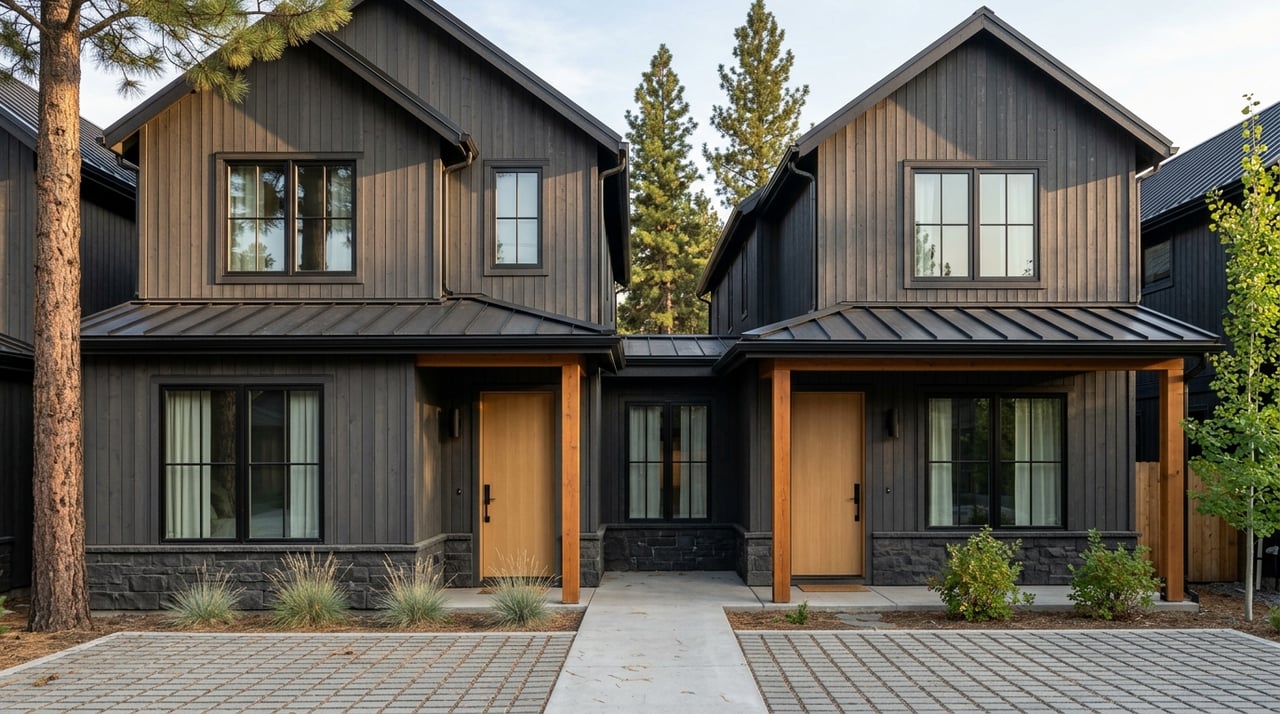
Are Hailey townhomes a smart long-term buy, or just the lower-cost alternative to Ketchum and Sun Valley? If you are weighing value, future demand, and carrying costs in Blaine County, that question matters more than ever. The good news is that Hailey offers a compelling mix of lower entry pricing, policy support for attached housing, and a market shaped by limited supply. Let’s break down what makes Hailey townhomes worth a closer look.
Hailey’s value position stands out
If you want a foothold in the upper Wood River Valley without paying Ketchum or Sun Valley pricing, Hailey is still the value-oriented option. Current market data shows a median listing price of $917,450 in Hailey, compared with about $1.447 million in Ketchum and $1.375 million in Sun Valley.
The price-per-square-foot gap is also hard to ignore. Hailey sits at a median listing price per square foot of $502, while Ketchum is around $1,100 per square foot. For a long-term buyer, that lower basis can create more flexibility on both monthly costs and future resale strategy.
Townhome pricing offers multiple entry points
Hailey’s current townhome inventory shows a meaningful spread in pricing. Examples range from about $395,000 to $869,900, which gives you options depending on whether you are targeting a lower entry point or newer construction.
That range matters because it supports different hold strategies. You may choose an older unit with a lower upfront cost, or pay more for newer construction in exchange for potentially fewer near-term maintenance issues.
By comparison, current Ketchum townhome examples are far higher, including listings at $2.675 million for a two-bedroom unit and $4.495 million for a new-construction four-bedroom unit. If your goal is long-term exposure to the area with a more moderate capital outlay, Hailey has a different risk and pricing profile.
Long-term demand has structural support
A long-term investment case works best when demand is not driven by hype alone. In Hailey, the city’s own housing policy points to several ongoing pressures: a resort-based regional economy tied to Sun Valley, second-home demand, land scarcity, and underbuilding.
Those conditions matter because they can support demand over time, especially for housing types that offer a more accessible price point than detached homes in nearby markets. The city has also stated that it wants more housing diversity and more market housing through code changes and partnerships, which is a favorable backdrop for attached housing like townhomes.
Hailey’s land-use approach supports in-town housing
Policy does not guarantee appreciation, but it can shape long-term supply and development patterns. Hailey’s land-use code is explicitly supportive of infill, mid-density housing, and pedestrian-oriented development in areas such as the Downtown Residential Overlay, Small Residential Overlay, and Townsite Overlay.
For you as a buyer, that matters in practical terms. Townhomes located near the historic core or other in-town amenities may benefit from a policy environment that supports this kind of housing form over time.
Rental supply looks tight across the valley
If part of your long-term thinking includes rental demand, current valley-wide supply is worth noting. Realtor.com’s current market data shows only 6 homes for rent in Hailey, 4 in Ketchum, and 1 in Sun Valley.
That is not the same as a formal vacancy study, so it should be viewed carefully. Still, it does suggest limited visible rental inventory, which can support demand for well-located housing when broader supply stays constrained.
Townhomes can simplify maintenance
One reason townhomes often appeal to long-term owners is reduced day-to-day exterior maintenance compared with detached homes. That can be especially attractive if you want a more manageable property or if you split time between Blaine County and another location.
That said, easier maintenance does not mean fewer ownership details. Townhomes often come with homeowners association dues, and those dues need to be reviewed as part of your full monthly cost.
HOA review is part of the real analysis
When you evaluate a Hailey townhome as an investment, the monthly HOA number is only the starting point. You also need to understand what the dues cover, whether reserves appear adequate, and whether the association has a history of special assessments.
This is where a lower purchase price can be misleading if you do not look deeper. A townhome with a lower entry cost but weak reserves or deferred maintenance could become more expensive over time than a newer unit with stronger association planning.
Newer versus older townhomes changes the math
Current listings in Hailey show a clear difference between older or simpler townhomes and newer construction. Older options can be found roughly in the $395,000 to $560,000 range, while newer construction is listed around $750,000 to $869,900.
That creates a classic tradeoff. A lower basis may improve affordability today, but older systems and future capital expenses can affect your total return. Paying more upfront for newer construction may reduce immediate maintenance risk, though the best option depends on your holding period and cash-flow tolerance.
Flood due diligence matters in Hailey
Not every risk is obvious from a listing. In Hailey, flood exposure is a property-specific item that deserves close review.
The city has a Flood Hazard Overlay District for special flood hazard areas. It also notes that flood insurance can take up to 30 days to become effective and that certain work in those areas requires a Flood Hazard Development Permit.
For a long-term hold, this affects both ownership cost and renovation planning. Before you buy, it is wise to confirm whether the parcel sits in a flood overlay and what that may mean for insurance, improvements, and future resale questions.
Short-term rental assumptions should stay conservative
Some buyers look at townhomes through the lens of short-term rental income. In Hailey, it is smart to underwrite that strategy carefully.
The city’s 1% for Air local option tax applies to hotels, motels, short-term rentals, and rental cars. On top of that, any short-term rental plan should be checked against the property’s HOA rules and the specific zoning or approvals tied to that home.
In other words, do not assume that a townhome will automatically perform as a short-term rental just because demand exists in the broader resort region. The safer approach is to verify the rules first and model income conservatively.
Owner-occupants may see tax advantages
If you plan to live in the townhome as your primary residence, Idaho offers tax benefits that can improve affordability. The homeowner’s exemption can remove 50% of the value of a primary residence, up to $125,000, from property tax.
There is also a Property Tax Reduction program that can reduce property taxes on an eligible primary residence by as much as $1,500. In Blaine County, the 2025 average property tax rate was 0.325% in urban areas and 0.299% overall.
For owner-occupants, those details can materially change the annual carrying-cost picture. This is one reason the same townhome may pencil differently for a full-time resident than for a pure investor.
The strongest case is often scarcity
In Hailey, the long-term investment argument is usually stronger as a scarcity-based hold than as a pure yield play. The city identifies resort-driven demand, land scarcity, and underbuilding as structural market pressures, while current pricing remains lower than nearby Ketchum and Sun Valley.
That combination can appeal to buyers who want durable market exposure in Blaine County without stepping into the much higher pricing tiers to the north. If your goal is long-term positioning rather than chasing aggressive short-term returns, Hailey becomes easier to justify.
Key questions before you buy
The best long-term purchases usually come down to disciplined due diligence. Before moving forward on a Hailey townhome, focus on practical questions like these:
- What are the monthly HOA dues?
- What do the dues cover?
- Is there a reserve study?
- Has the association had special assessments?
- Are rentals allowed, and is there a minimum lease term?
- Is the property in a flood overlay?
- If owner-occupied, does it qualify for the homeowner’s exemption?
- How do total carrying costs compare with alternatives in Ketchum or Sun Valley?
Those answers can tell you far more than a headline list price. In a market like Hailey, investment quality often comes down to the details behind the property, not just the zip code.
Bottom line on Hailey townhomes
Hailey townhomes can make sense as long-term investments when you approach them with clear expectations. The market offers a lower entry point than Ketchum and Sun Valley, local policy support for attached housing, and signs of constrained housing supply across the valley.
The opportunity is real, but so is the need for careful underwriting. HOA structure, flood exposure, rental rules, property age, and your intended use all shape whether a specific townhome is a strong hold or just an average one.
If you want help evaluating a Hailey townhome through a data-first lens, Jordan Jadallah can help you compare pricing, carrying costs, and long-term positioning across Blaine County.
FAQs
Are Hailey townhomes more affordable than Ketchum townhomes?
- Yes. Current Hailey townhome examples range from about $395,000 to $869,900, while current Ketchum examples in the research were much higher, including listings at $2.675 million and $4.495 million.
What makes Hailey townhomes appealing for long-term ownership?
- Hailey offers lower entry pricing than Ketchum and Sun Valley, and the city identifies structural pressures like land scarcity, underbuilding, and resort-driven demand that can support long-term housing demand.
What HOA details matter when buying a Hailey townhome?
- You should review the monthly dues, what they cover, reserve funding, and any history of special assessments because those items directly affect your real carrying costs.
What flood issues should buyers check for in Hailey townhomes?
- You should confirm whether the property is in a special flood hazard area, since flood insurance timing, permit requirements, and future improvement plans may be affected.
Can you use a Hailey townhome as a short-term rental?
- Possibly, but you should verify the HOA rules and the property-specific zoning or approvals first, and you should underwrite any short-term rental income conservatively.
Do owner-occupants get property tax benefits on a Hailey townhome?
- Yes. A qualifying primary residence may be eligible for Idaho’s homeowner’s exemption, and some eligible owners may also qualify for the Property Tax Reduction program.